
Jenna Tregenza, RCAT, BScN, RN, RP (Qualifying)
St. Thomas, ON
Jenna Tregenza is an art therapist and registered nurse based in St. Thomas, Ontario. With a background in community health nursing and a deep commitment to the healing power of creative expression, Jenna supports individuals, families, and communities through trauma-informed, strengths-based art therapy. Her work bridges health, art, and community connection, creating accessible and inclusive spaces where people of all ages can explore wellbeing, resilience, and self-expression.
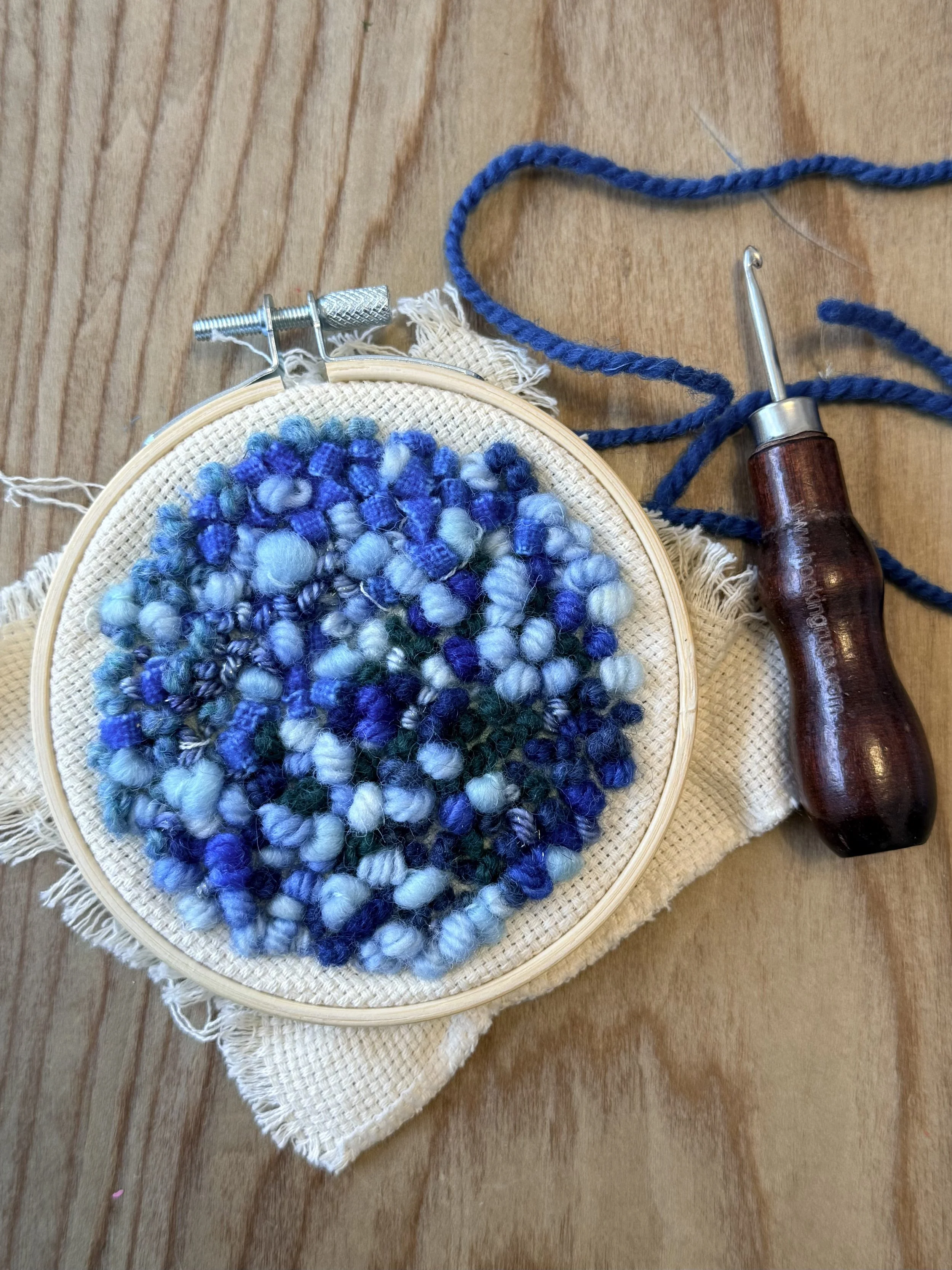
Figure 1, Rug hooking as play.
Do pointy sticks, hammers, and cutting tools ever make you wince when supporting children or teens in art therapy? In recent years there have been growing calls to embrace risk in play (Gill et al., 2019), and in the context of art therapy, how do we make it happen without another blistering hot glue burn? In my practice as an art therapist supporting children and families, risky play has been an important adjuvant.
Risky play is defined as “thrilling and exciting forms of physical play that involves uncertainty and a risk of physical injury” (Sandseter, 2009) and can be broken down into six categories of play including: great heights, rapid speeds, dangerous tools, dangerous elements, rough and tumble, and disappearing or getting lost (Sandseter, 2009). It has many benefits for the developing child (Canadian Pediatric Society, 2024) however, research has found that children are risk-deprived and have not had the chance to build up their tolerance for it (Kleppe et al., 2024). As art therapists, we may be working with children who are experiencing nervous system activation, climate anxiety, or other worries tied to feelings of uncertainty in a changing world. These changes, coupled with risk aversion at home, schools, and on playgrounds, means that children need risky play now more than ever to help prepare them for uncertainty throughout their lifespan (Beaulieu & Beno, 2024).
From a developmental perspective, risky play can promote pro-social behaviour, lift the mood, support cognitive function, increase physical activity, and improve mental health (Brussoni, 2025; Dodd & Lester, 2021). Children are not born with executive functioning skills but need to practice these skills to develop them. This includes self-regulation, attention, self-control, planning, perseverance, organization, working memory, flexible thinking, and self-control which are often named as therapy treatment goals. Although safety is a misnomer and never 100%, overprotective adults may be making things too safe without considering differences between risk and hazard. Further, children with anxiety disorders are more likely to misinterpret risk as danger (Brussoni, 2025). From an equity perspective, there may be barriers to implementing risky play in the parent-child relationship due to parenting styles, trauma, or present involvement with child protective services. Hence, there is privilege in being able to integrate risky play.
Below, I reflect on the ways I’m integrating risky play into my art and work as an art therapist supporting children and families.
Dangerous Tools
Risk of injury is discussed at the time of informed consent. Scissors, staplers, linocut tools, collage tools, and hot glue tools are some examples of items that could offer youth a tiny spark of danger. For example, while using a linocut carving tool, there is risk in both the creative process and the act of carving with a tool that could slip and injure the client. To remove the hazard in this case (eye injury), I ask children or teens to wear a pair of safety glasses (Figure 2). After all, adventurous play is a mechanism for reducing risk for childhood anxiety (Dodd & Lester, 2021).
“In an unpredictable world, it’s important for art therapists to encourage clients to play, experience adventure, and an unpredictable outcome in their art.”
Risky play differs from a child being dysregulated or acting in an unsafe way. In alignment with humanistic and person-centered approaches to art therapy, autonomy, self-direction, and trust in the client are guiding principles (Rubin, 2016). On the expressive therapies continuum (Hinz, 2019), there are healthy risk experiences in the sensory, perceptual, and kinesthetic domains. Risky play manifests in our use of challenging or unfamiliar materials, large scale messy or physically demanding art-making with tools, and through exploration of intense themes or taboo topics. Art therapists can select materials that invite challenges without harm or hazard and establish boundaries for their use. Furthermore, in the context of trauma-informed care, risk can be titrated while maintaining nervous system regulation. Clients co-regulate with the art therapist in the presence of manageable risk.
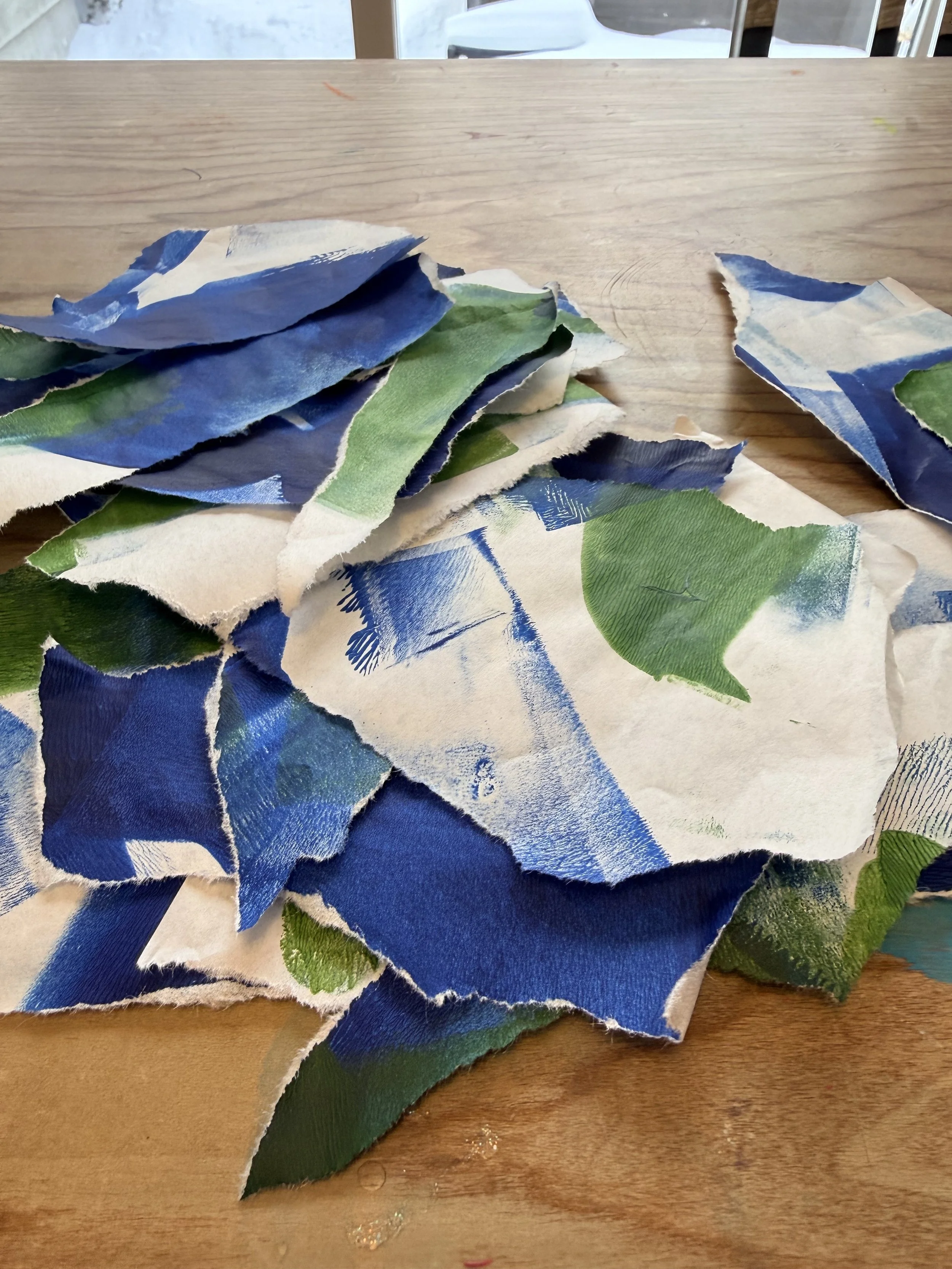
Here I share my post-session response art to a client that is not allowed to use paint at home.


Thrilling and Exciting Play
In many schools, it is common to see the removal of natural materials from the outdoor play environment to prevent injuries, however, at a school-based outdoor Art Hive, ecological natural materials were reintroduced for art-making. Preliminary concerns from school staff included possible puncture wounds or abrasions from sticks and blunt force injuries from stones, although during the pilot period no injuries were reported (Tregenza, 2024). Participants used sticks to make wands and fishing rods and drew pictures in fresh mud and snow. Children jumped down from various heights (off a bench or landscaping rock) while casting thrilling made-up spells on classmates.
Chance of Getting Lost
It can be tempting to jump in and help clients when they find themselves stuck or lost in their process. Art therapists use presence and observation as interventions to normalize feelings related to uncertainty. Help-seeking behaviours are essential life skills that also develop our therapeutic alliance, however there is also power in accompanying the client as they find their own way out, back, or through. Lastly, through art-making and play, there is an opportunity for the art therapist to celebrate the client’s strengths such as courage, effort, problem solving, and self-awareness which can also be explored in supervision (Carpendale, 2023).
“When working alongside children with histories of trauma, risky play can help them reclaim their sense of agency. ”
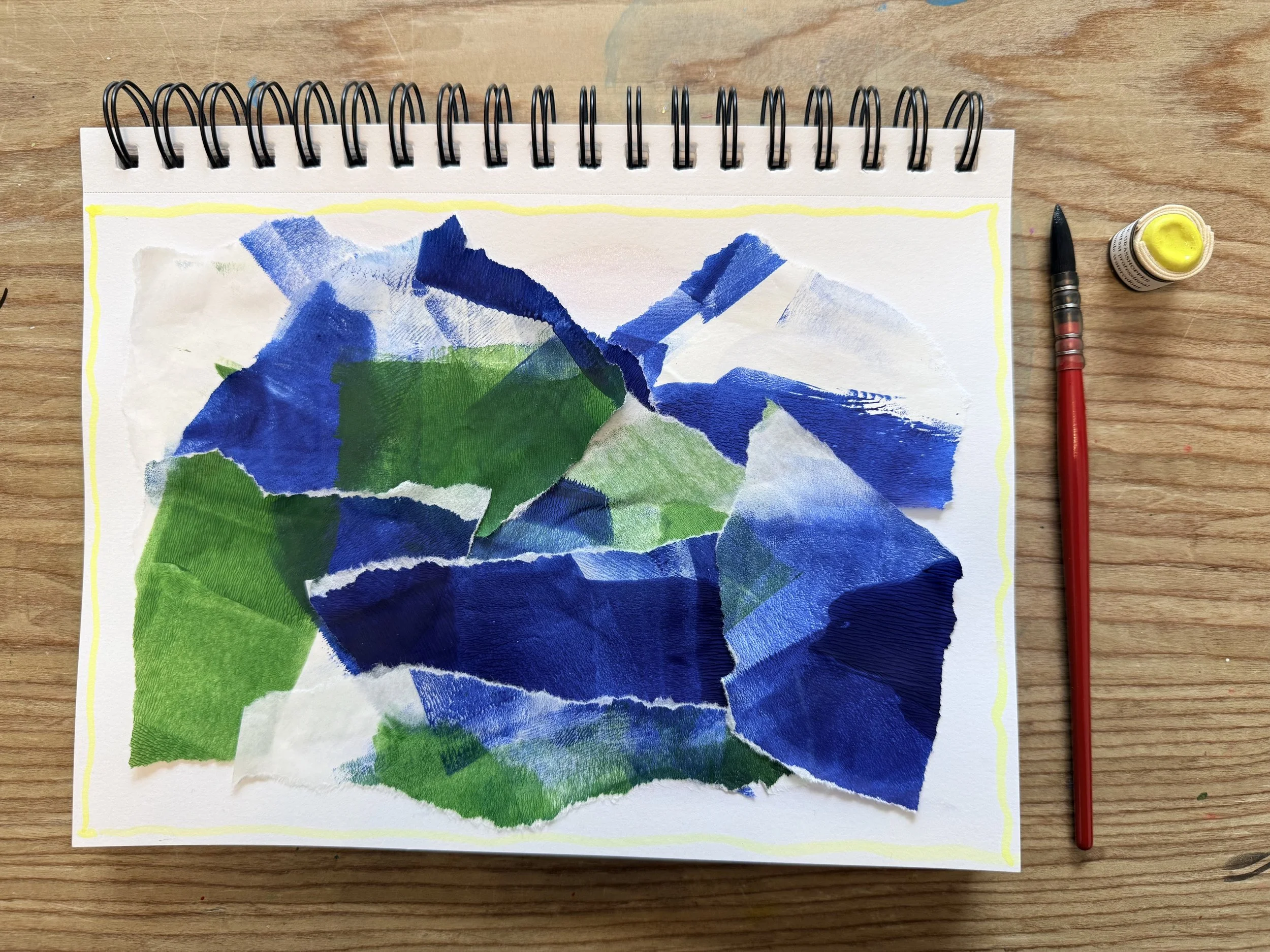
Figure 5, Art therapist response art: Playing with the arrangement of collage materials.
Are you Willing to Take a Risk?
It’s important for art therapists to have self-awareness of their own risk tolerance and to practice with cultural safety when exploring parenting. Risky play involves allowing our clients to make choices, test limits and experience natural consequences in their art-making process. When working alongside children with histories of trauma, risky play can help them reclaim their sense of agency.
Practice Considerations
Integrate risky play theory into the informed consent process.
Play with your art; go on an adventure! Make it thrilling and exciting– bonus points if you work outdoors.
Tools offer an element of risk; consider the principle “as safe as necessary”.
Orient clients to studio safety equipment such as safety glasses, the first aid kit and eyewash/sink area.
Provide psychoeducation on the mental health benefits of risky play and encourage clients to engage outside of sessions (homework).
The same applies to us as therapists; Have fun and let your inner child lead the way. Take a risk– it’s good for you!
References
Brussoni, M. (2025). Retrieved from https://www.youtube.com/watch?v=yn7KEUE_XVs
Beaulieu, E., & Beno, S. (2024). Healthy childhood development through outdoor risky play: Navigating the balance with injury prevention. Paediatrics Child Health, 29(4), 255–261. https://doi.org/10.1093/pch/pxae016
Canadian Pediatric Society. (2024). Retrieved from https://cps.ca/en/documents/position/outdoor-risky-play
Dodd, H. F., & Lester, K. J. (2021). Adventurous play as a mechanism for reducing risk for childhood anxiety: A conceptual model. Clinical Child and Family Psychology Review, 24(1), 164–181. https://doi.org/10.1007/s10567-020-00338-w
Carpendale, M. (2023). The magpie’s nest: Arts-based supervision. Essenze Publications
Gill, T., Power, M., & Brussoni, M. (2019). Risk benefit assessment for outdoor play: A Canadian toolkit. Child & Nature Alliance of Canada.
Hinz, L. (2019). Expressive therapies continuum: A framework for using art in therapy. Routledge.
Kleppe, R., Sandseter, E. B. H., Sando, O. J., & Brussoni, M. (2024). Children’s dynamic risk management – a comprehensive approach to children’s risk willingness, risk assessment, and risk handling. International Journal of Play, 13(4), 395–409. https://doi.org/10.1080/21594937.2024.2425539
Rubin, J. (2016). Approaches to art therapy. Routledge.
Sandseter, E. B. H. (2009). Characteristics of risky play. Journal of Adventure Education and Outdoor Learning, 9(1), 3–21. https://doi.org/10.1080/14729670802702762
Tregenza, J. (2024). The art of recess: Case study of a collaborative school-based ecological art hive to promote connectedness and belonging for BIPOC children in a rural area. Canadian Journal of Art Therapy, 37(2), 212–227. https://doi.org/10.1080/26907240.2024.2408858