
Art Gallery: Embracing Play
Garden of Friendship: Play, Ritual, and Relational Care, mixed media: acrylic paint, rice paper + Japanese ink, modeling paste, glitter, moss, 16x20”, 2025
Garden of Friendship: Play, Ritual, and Relational Care
Garden of Friendship: Play, Ritual, and Relational Care celebrates thirty years of friendship between myself and two close friends. While we come from distinct cultural backgrounds, our relationship has been sustained through curiosity, respect, and shared tea rituals. This work reflects how play can emerge through everyday acts of care— particularly in adulthood, where play is often quiet, relational, and easily overlooked.
At the heart of the composition are three teacups, each representing one of us. Tea functions as both metaphor and playful practice: an invitation to slow down, listen, and make time for one another. Rather than spectacle or performance, this piece reflects a gentle form of play that unfolds through ritual, imagination, and connection.
The central teacup represents my Japanese heritage and is rendered using Japanese ink on rice paper. It holds a yellow Kerria japonica rose, sculpted with modeling paste, symbolizing friendship that is supportive and enduring. To the left, a British teacup holds a purple thistle, symbolizing loyalty. To the right, a Persian teacup holds a red rose, symbolizing emotional depth.
A vine pours playfully from a teapot above, linking the cups and flowers. The teapot represents the ongoing care required to sustain friendship over time.
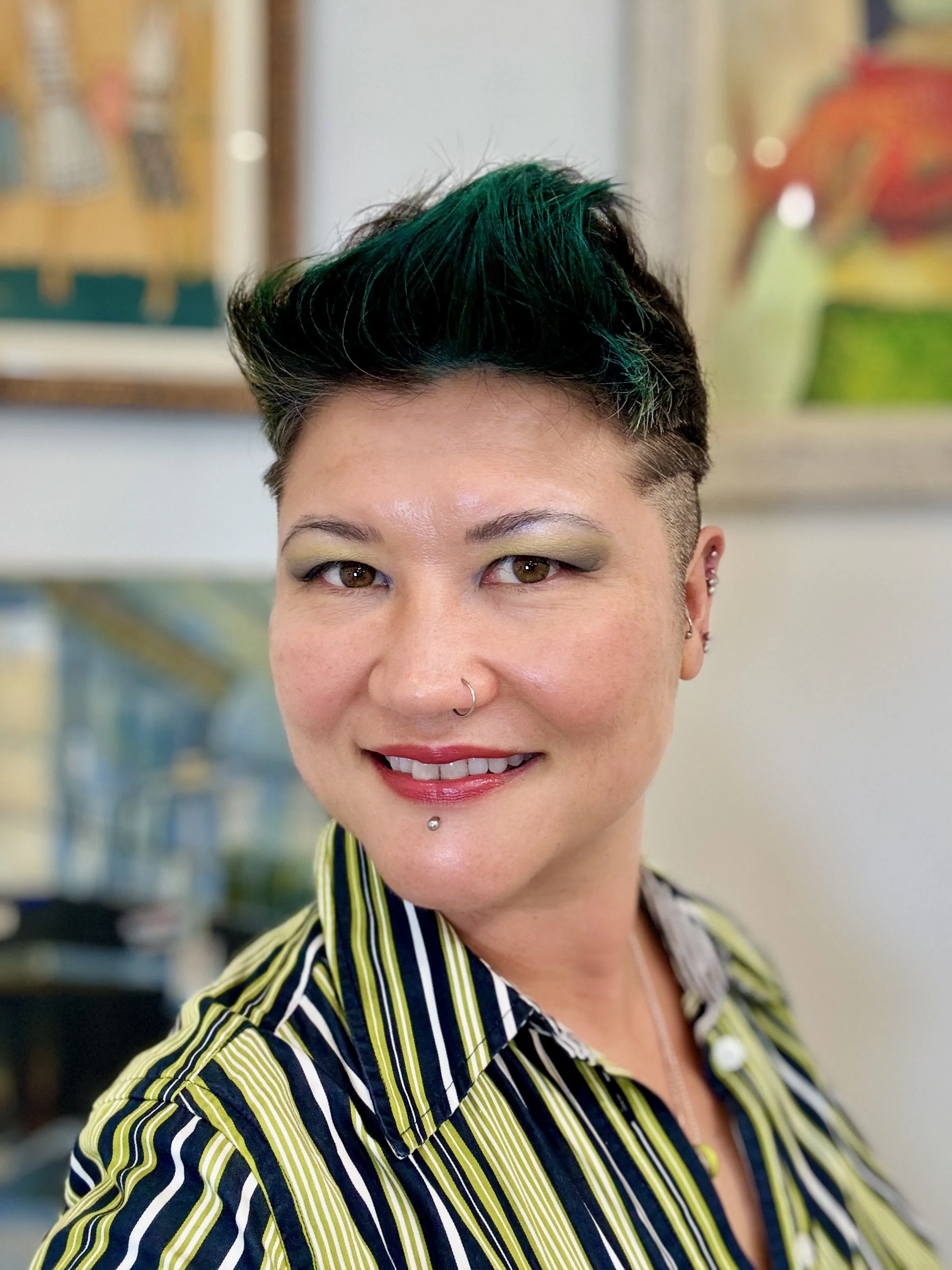
Tamiko Potts
Toronto, ON
Tamiko Potts (she/they) is a Toronto-based queer Japanese Canadian multidisciplinary artist whose practice spans documentary film, visual art, photography, and poetry. An Emmy-nominated television producer and award-winning filmmaker with over two decades of experience in production, they bring a cinematic, storytelling-driven approach to their creative work. Their practice explores identity, resilience, and memory, often through the lens of nature’s cycles and transformation.
Tamiko is currently studying art psychotherapy at the Canadian International Institute of Art Therapy and was selected for the Japanese Canadian Cultural Centre’s 2026 Digital Arts Residency.
Playful Patterns, watercolour & ink on watercolour paper, 9-1/4” x 12.5”, 2025
Playful Patterns
Play.
When I think of play, I think of children having fun and using their imagination. They are exploring and being curious, joyous, laughing, feeling free to be themselves. Play invokes a sense of innocence, spontaneity, and ease. Authenticity.
As an adult when I am reminded to play, I am faced with inhibitions, reservations, hesitation, fear, doubt. I am frozen, unsure how to play. Afraid of making mistakes.
When I gave myself permission to play, I noticed the hesitation and fear. Acknowledged it. Instead of giving it the wheel, I let it side beside me, join me on the ride. We moved forward and made marks. My body and thoughts began to soften, a smile on my face, enjoying the process as the doubts and judgments faded away. I found the joy and calm and felt pride in my bravery.
It was not always easy. It did not always turn out the way I wanted. But I did not fail. I succeeded at play.
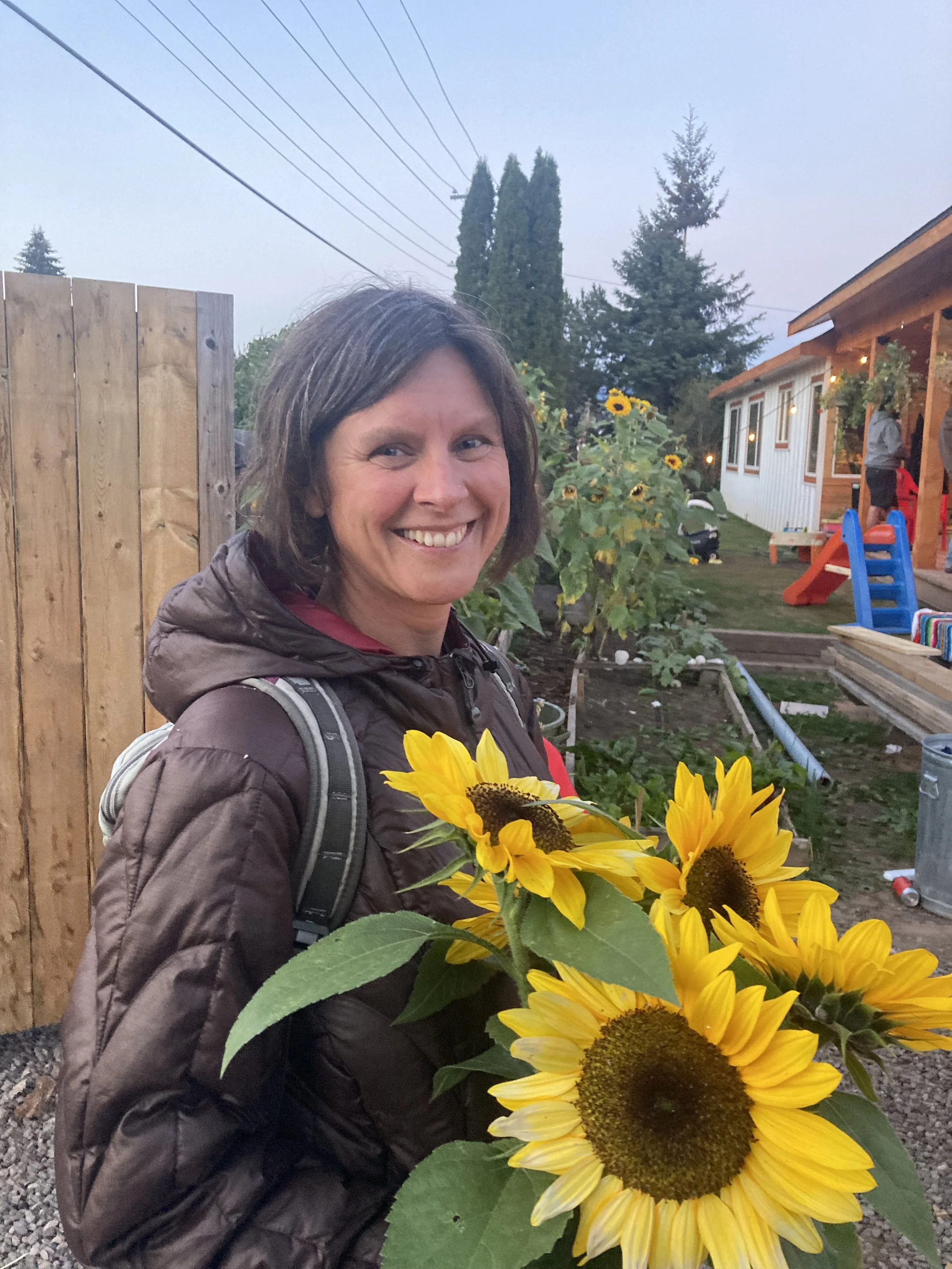
Julie Chaplin, ATP, RP (Qualifying)
Smithers, BC
Julie Chaplin is an artist, a creative, a woman, a mother, a wife, a daughter, a sister, a friend, a colleague, a healer, a painter …
Julie is a Professional Art Therapist and self-taught artist living with her family in Smithers, BC. Her art and her work is guided by curiosity and intuition, trusting the creative process to help express thoughts and feelings. Art reminds her every day of its magic and its ability to show up and provide exactly what is needed in that moment.
Imagination Playmates, colour photographs, 2025
Imagination Playmates
What a privilege it is to be an artist and art therapist, bringing the joy of creativity and play not only into my own life, but into the lives of others.
I play with my two-year-old grandson, my cat, art materials, recycled treasures, and gifts from the earth. I play by experimenting with new recipes, reworking gently used clothing, creating altars from found objects, and following threads of photographic curiosity.
It is an invitation to let imagination lead us to find joy in the mundane, to feel ourselves light up, to smile, giggle, and nurture the child within. Through play, we reconnect with ourselves, with one another, and with the creative pulse that binds us all.

Afsaneh Shafai, RP, RCAT, DTATI, BFA
Tkaronto/Toronto, ON
Afsaneh Shafai is an interdisciplinary artist, registered art therapist and psychotherapist, and a person of diaspora of Iranian-Canadian heritage. She graduated in Fine Arts from the University of Manitoba. She continued her studies in Art Therapy at the Toronto Art Therapy Institute. She is based in Tkaronto (Toronto), the ancestral territory of the Mississaugas of the Credit, the Anishnabeg, the Chippewa, the Haudenosaunee, and the Wendat peoples, and the home to many diverse First Nations, Inuit, and Métis peoples. She had been involved in helping a diverse population of all ages with their mental health struggles for the past 30 years.
Circle of Belonging, pen and pencil on paper, 2025
Circle of Belonging
My art practice lives at the intersection of two worlds that have gradually woven themselves together: art and yoga. Both are rooted in my reverence for nature’s wisdom and my ongoing inquiry into the emotional landscapes that shape our human experience. I am drawn to exploring complex and often tender states such as joy, grief, uncertainty, fear, and the search for meaning, often through cultural and spiritual motifs, including an ongoing mandala series.
Lately, my creative practice has become a way of tending to my inner child—inviting more play, experimentation, and making without shame. Creating art allows me to reconnect with curiosity and to honour parts of myself that long to be expressed beyond productivity or outcome.
Circle of Belonging is a symbolic mandala that emerged following my attendance at the 46th Annual CATA-ACAT Conference. At the center of the drawing is a star representing myself as a being. Branching outward are forms in varied shapes and colours, symbolizing supports that hold me. Meeting individuals from the (Re)Centering Belonging BIPOC support group prompted deeper reflection on my own networks of care and on the ways belonging is co-created rather than individually attained.
At the time of making this piece, I was also developing a spiritual lineage tree as part of my ongoing decolonizing practice, leaning more intentionally into my culture and ancestral wisdom, reconnecting with my teachers. The mandala form offers a non-hierarchical structure that reflects this inquiry—one that holds interconnection and the wisdom carried through relationships.
Guided by the principle of Two-Eyed Seeing, Circle of Belonging holds embodied, intuitive, ancestral, and relational ways of knowing. The work is offered as an invitation to reflect on relationships, community, and the supports that allow belonging to be co-created.
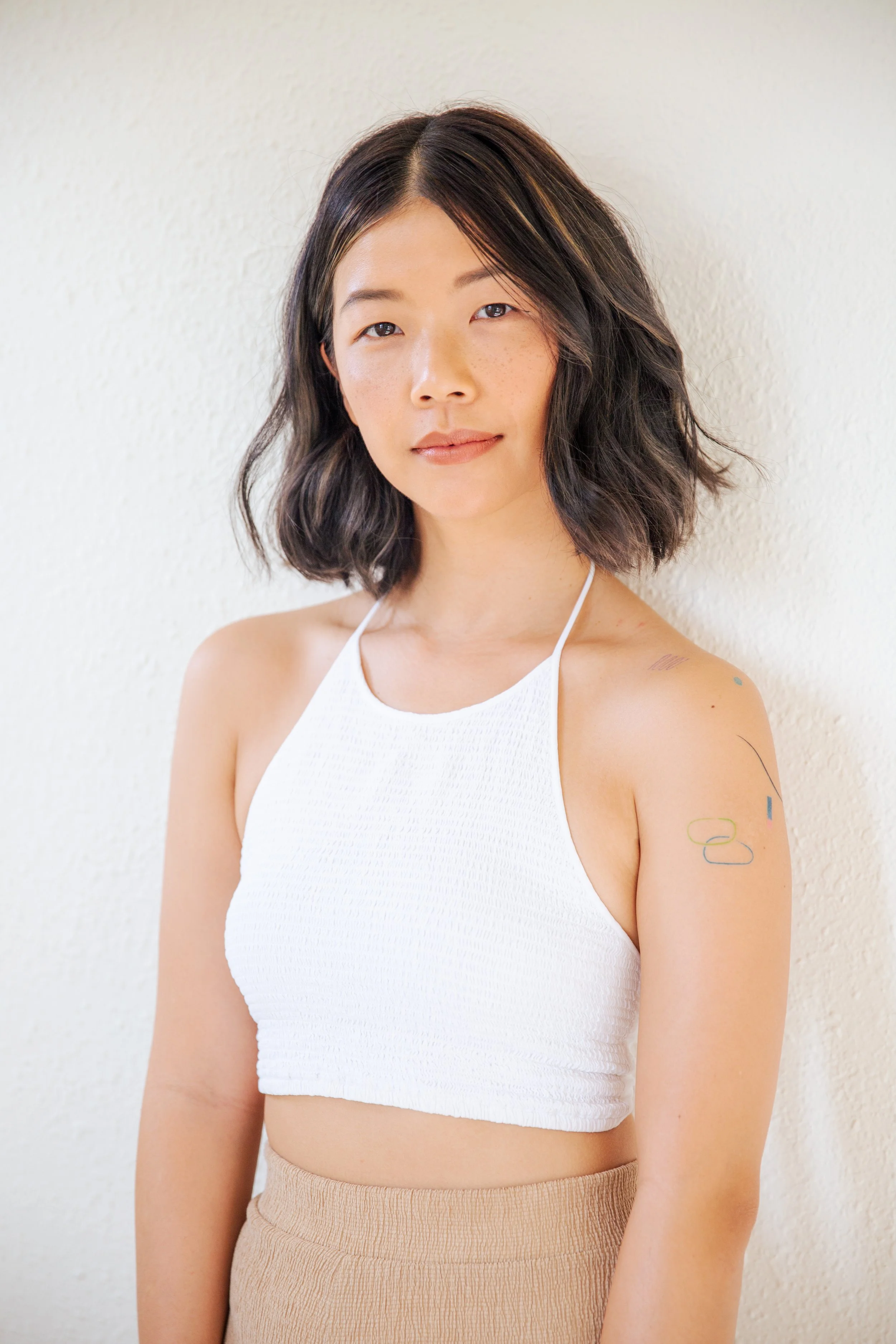
Coco Huang, RTC, DVATI
Vancouver, BC
Coco is an Art Therapist & Trauma-Informed Yoga Teacher, supporting her clients to allow what’s been suppressed to emerge, process emotions, and step into wholeness through creative play, self-inquiry, and body-based practices. Rooted in Daoist, Buddhist, and Yogic wisdom, her practice honours the ancient wisdom held within the body and expressed through the creative spirit.
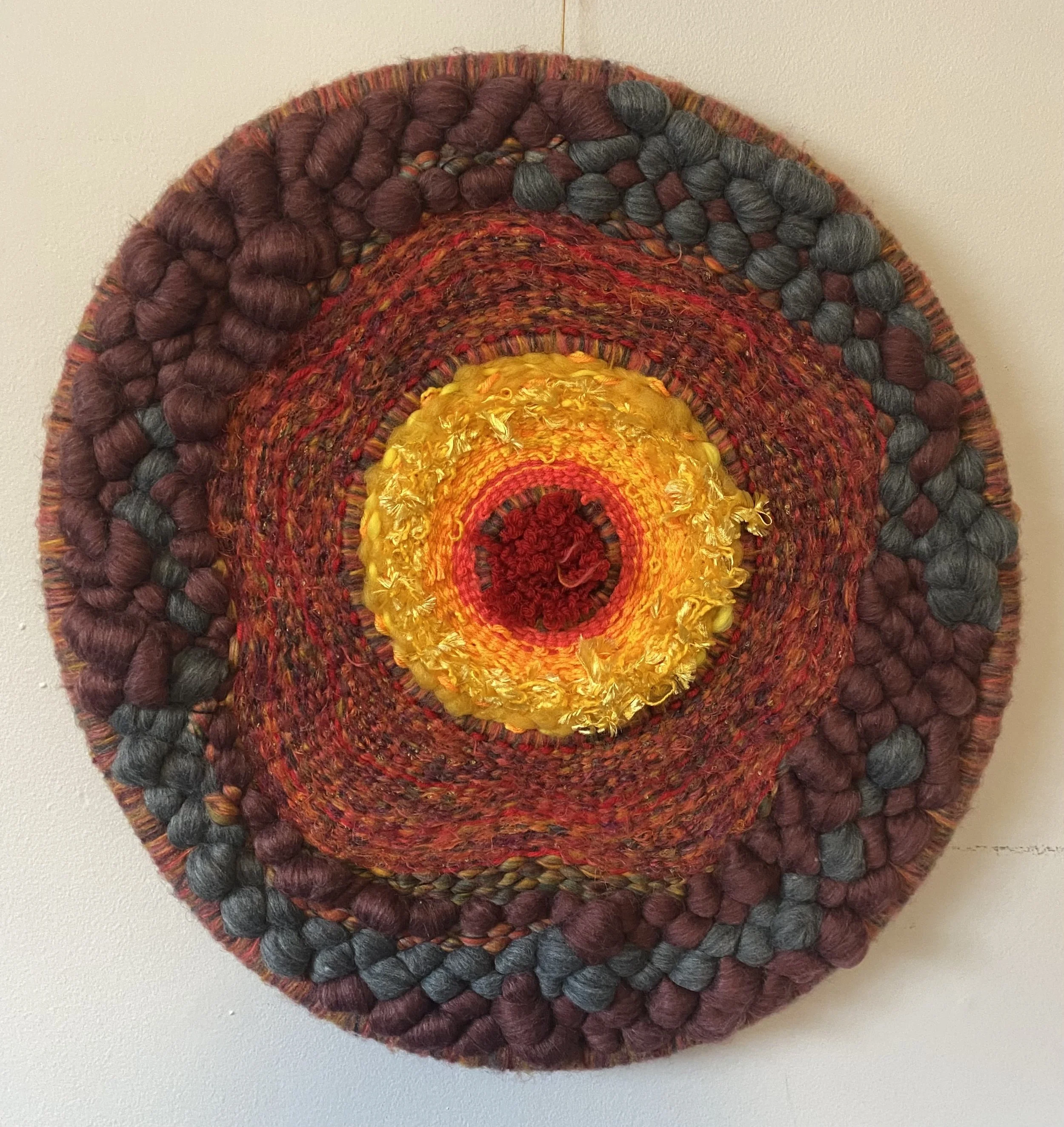
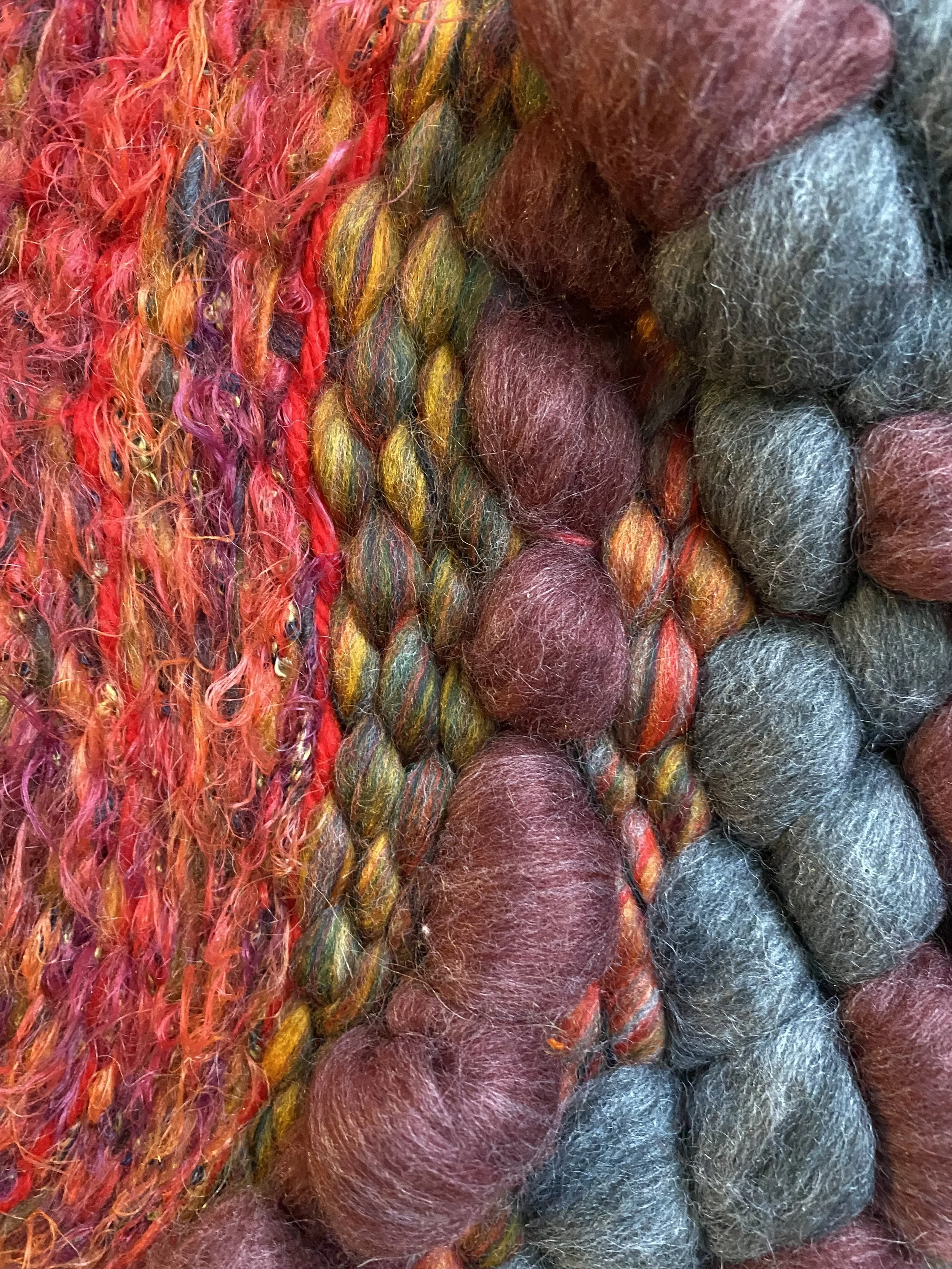
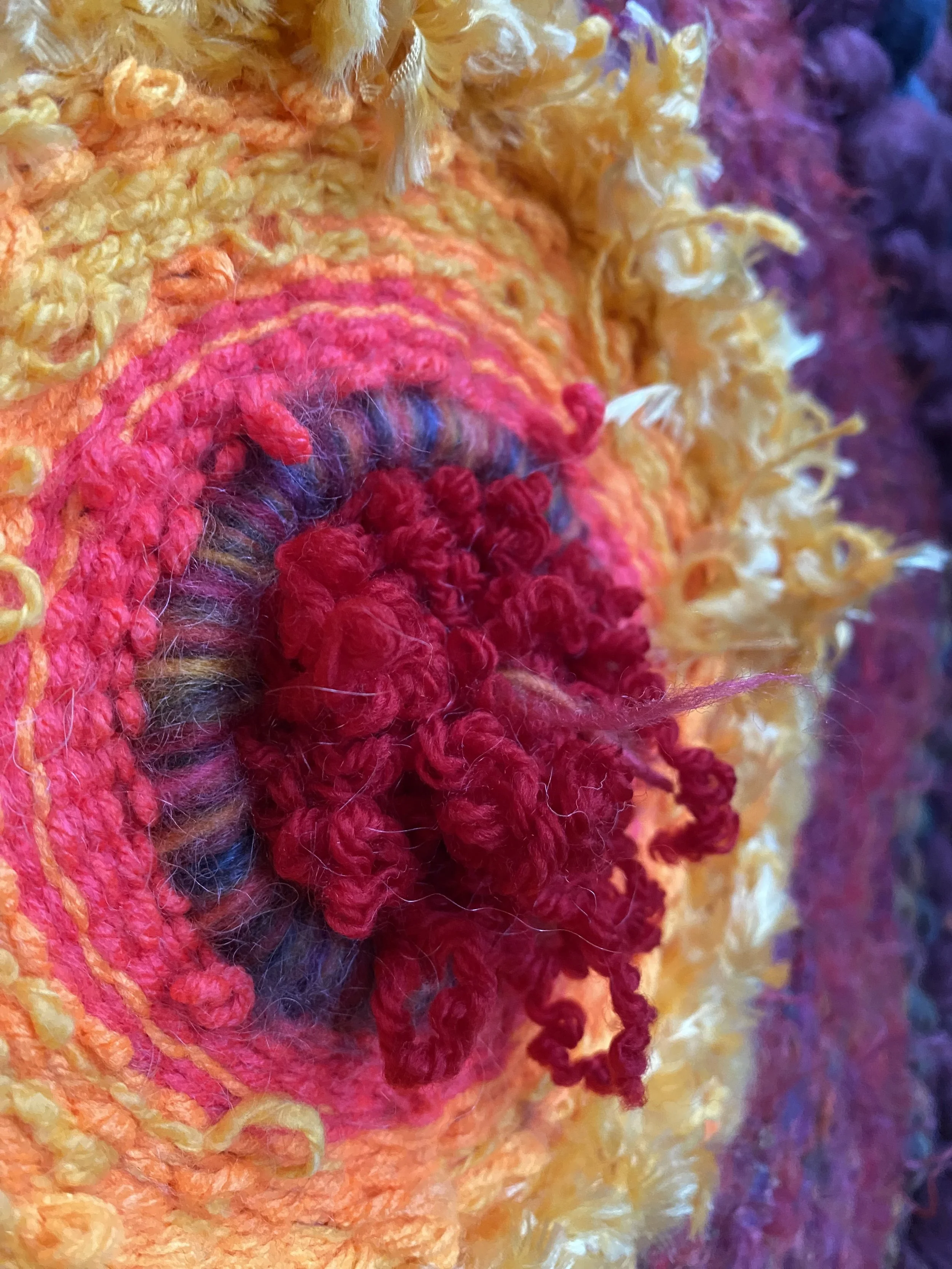
Fire
Fire is an exploration of the internal life-force energy required to engage in authentic activities that may have a level of uncertainty or risk, such as play. Unstructured play involves flirting with the unknown and enacting novel ideas or approaches, necessitating a layer of vulnerability. It requires a level of flexibility and responsiveness to the situation and ways of thinking and being beyond habituated routines.
The energetic and vibrant colours of red, orange, and yellow in the central two rungs of Fire suggest the intensity, and movement of flames. The middle red colours and textures are softer, bringing to mind a gentler heat fueled by the center. The outer rung is duller in colour and each interlacement is larger in scope, potentially referencing a containing rock enclosure that may be both supportive and restrictive.
The process of making the artwork reflects the tension between the playful, generative, but potentially dangerous energy of the flames with the stability, protection, but potentially limiting energy of the surrounding rocks. The artwork was inspired by a dream of a fireball light fixture that had a malfunctioning dimmer switch, suggesting a struggle to connect to or make use of this energy source. The creation of the artwork was an intentional dialogue with this dream imagery, and upon reflection the process of making the artwork itself reflects this tension: the regimented pattern of over-under weaving was contrasted with the flexibility and spontaneity of varying the tension, colour combinations, and shape or rhythm of the rungs.
The interplay of a supportive structure of the weaving process, paired with the unstructured aesthetic decisions may reflect the dance of the personal balance needed between safety and spontaneity in play, perhaps pointing to areas where further playful risks can be taken.
Mindy Alexander, RCAT, DTATI
Ottawa, ON
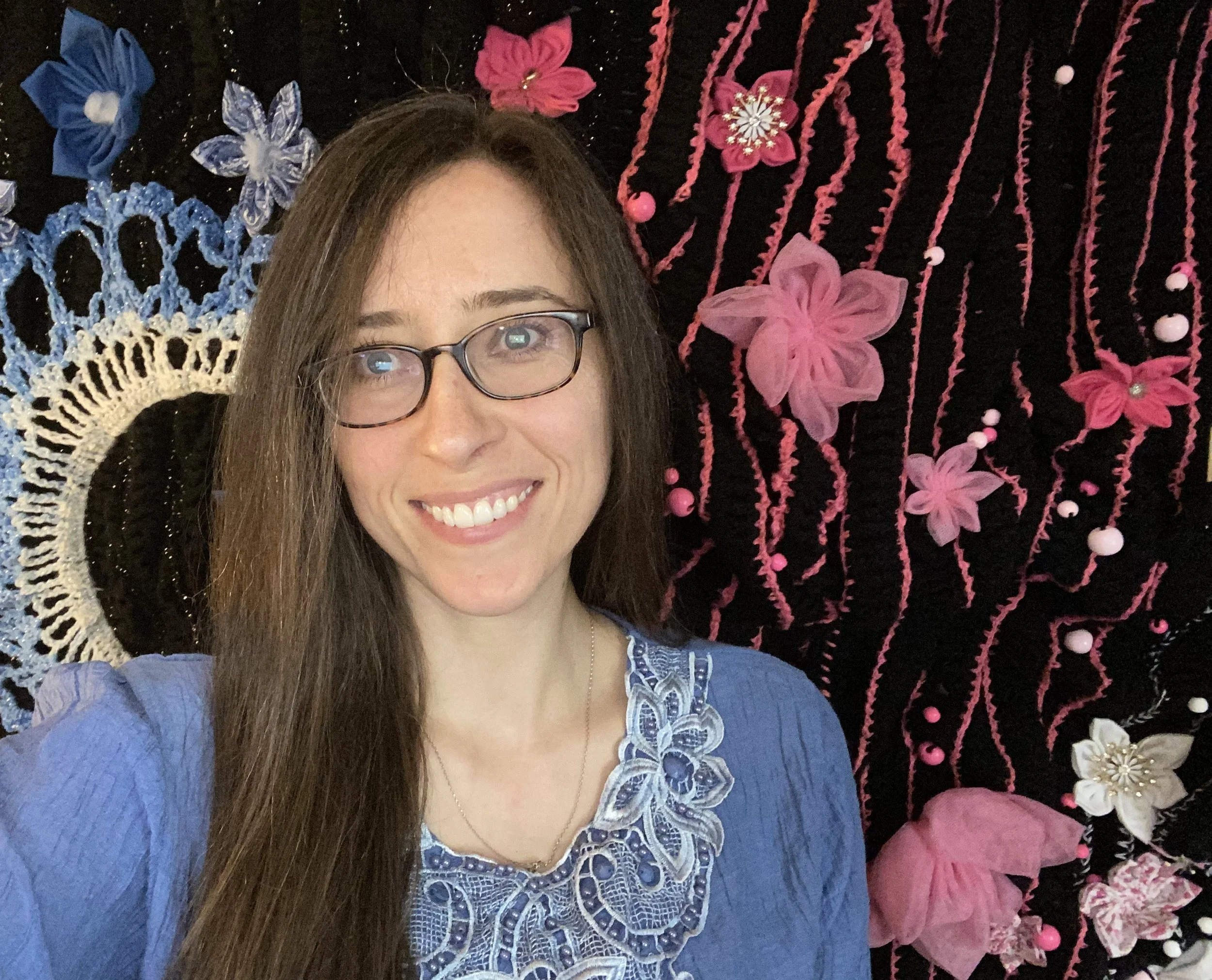
Mindy Alexander is an artist and art therapist living in Ottawa, Ontario. Her art reflects the messy experience of being human. She uses art as a way of cultivating presence, curiosity, authenticity, and beauty (even, and especially, amid hardships and uncertainty). You can see more of her art at mindytheartist.weebly.com and learn about her art therapy practice at discoveryarttherapy.com.